Product visualisation
One photograph to an AR asset
No CAD file, no scanning rig, no studio day. One image of a chair, reconstructed into geometry, finished into a product asset, and placed in a real room at true size. Every step ran on one desktop machine.
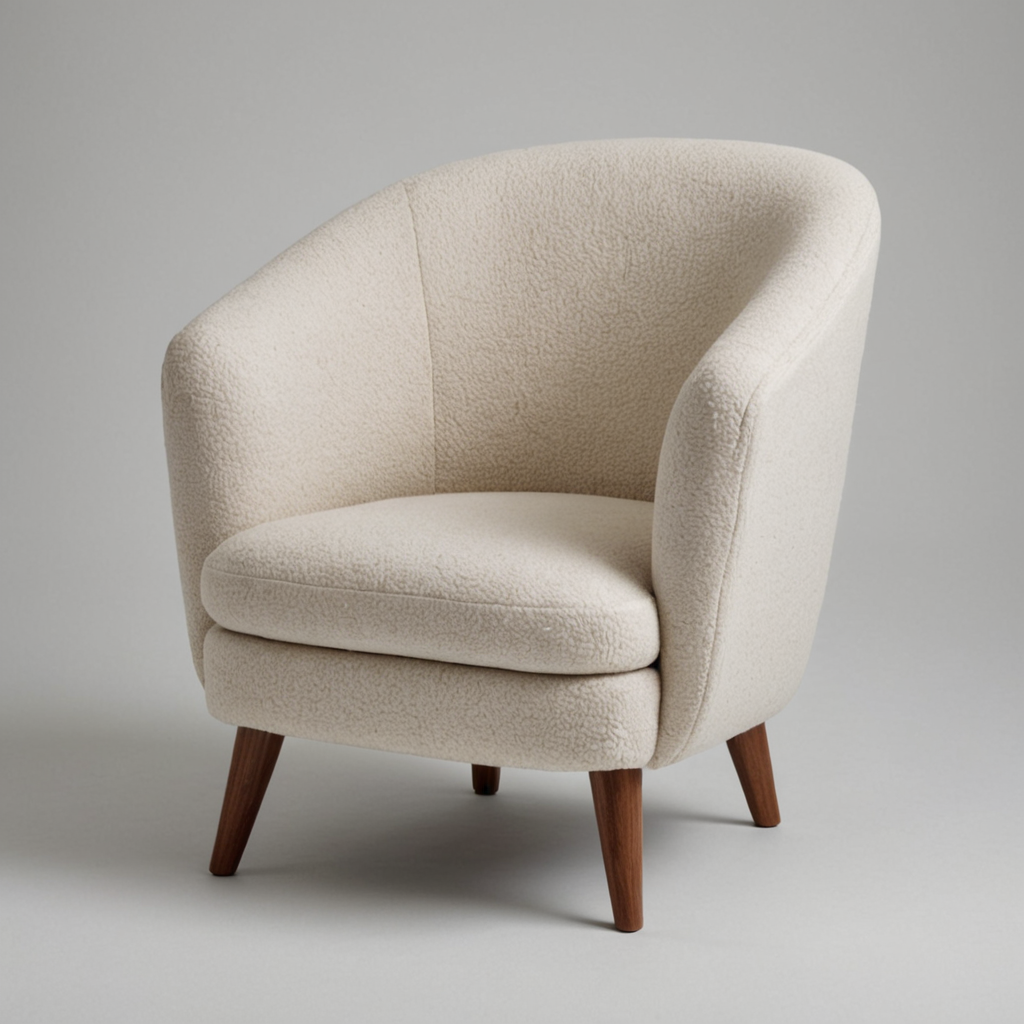
The photograph
One object, three-quarter view, plain seamless, even light. Reconstruction quality is decided here more than anywhere downstream.
1024 x 1024 · SDXL Turbo, local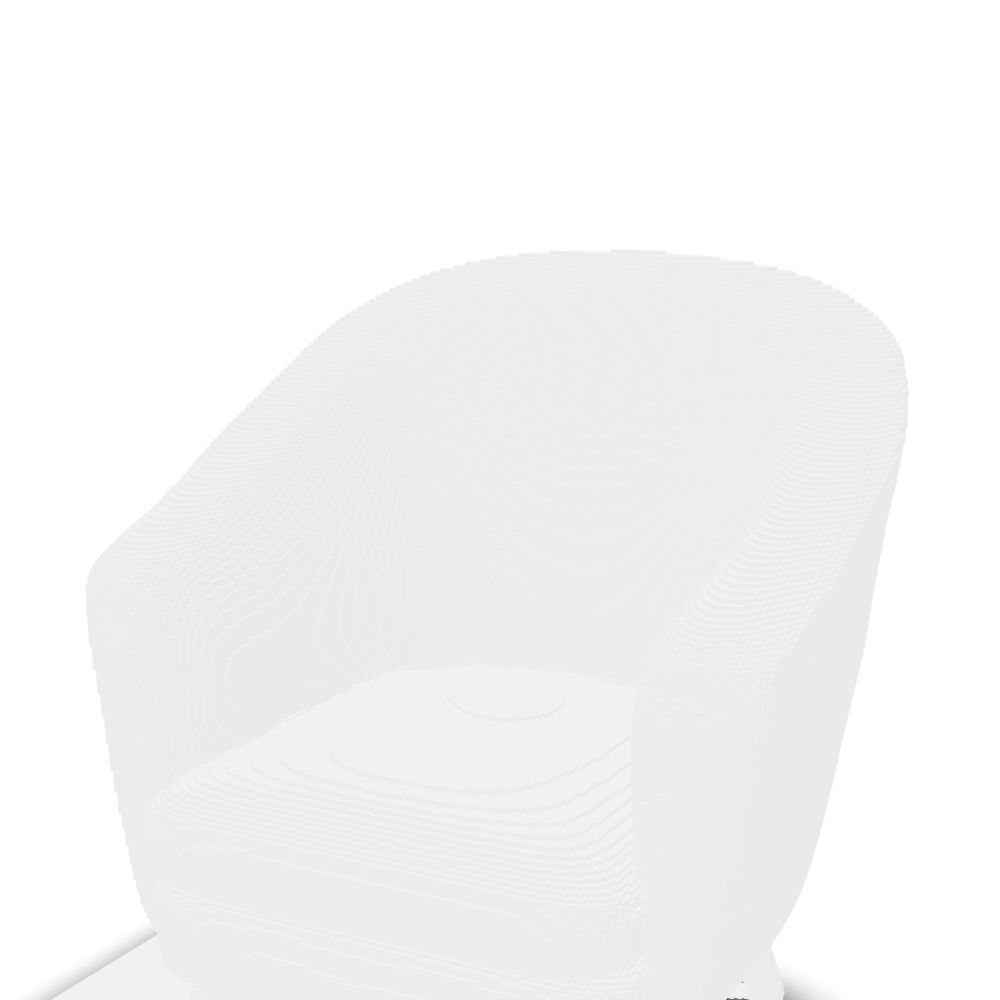
The reconstruction
Shape only, and it cannot tell the product from the set: the seamless and the contact shadow came back as a slab of geometry under the chair.
500,580 triangles · Hunyuan3D 2.0, local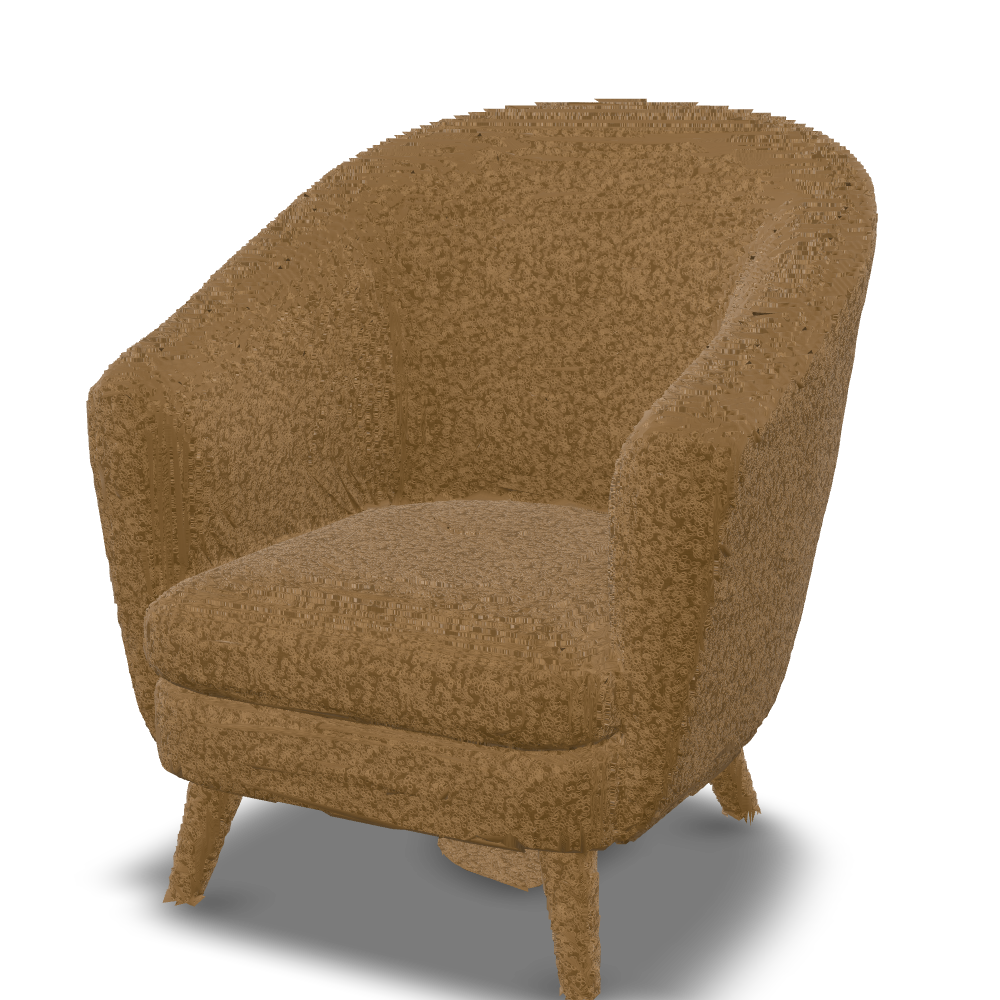
The product asset
Floor cut away, simplified, scaled to a real chair, box-projected UVs, the catalogue bouclé applied with its sheen lobe, MikkTSpace tangents baked.
60,572 triangles · 70 x 78 x 62 cm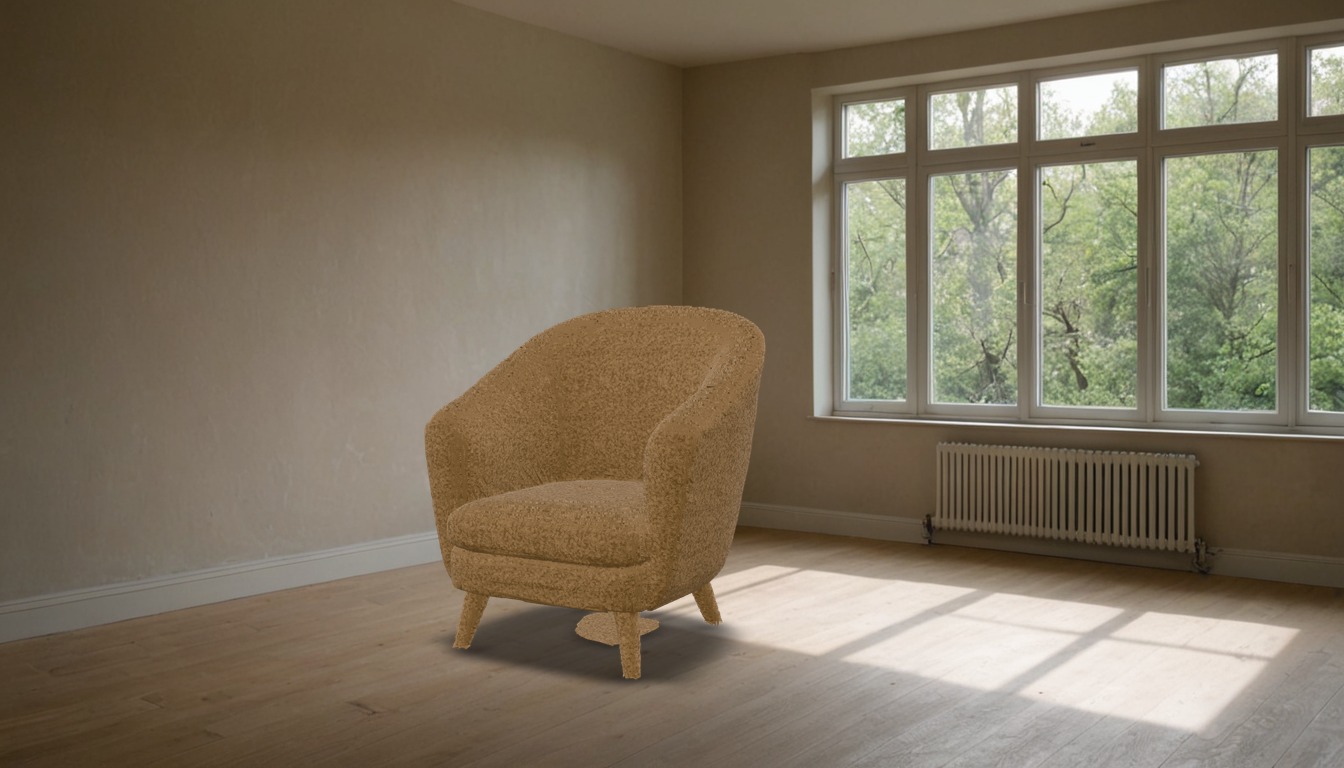
In the room
glTF for Android and the web, a matching USDZ for iOS AR Quick Look, both at metric scale with resizing locked off so the answer to "will it fit" is the true one.
4.93 MB glTF · 3.44 MB USDZ
The photograph it came from
Drag to turn it. On a phone, "View in your room" places it on your floor at 78 cm tall.
What this technique does well, and where it stops
Single-image reconstruction is very good at silhouette and proportion, and that is most of what a shopper is judging when they ask whether a piece suits the room. It is not a measuring tool and it is not a scanner.
- The model returns shape, not colour. The upholstery here is the catalogue's own Camel Bouclé applied afterwards, which is the honest arrangement anyway: the mill owns the fabric, not the reconstruction.
- The back of the chair is inferred, not observed. One view cannot see it. For anything where the reverse matters, shoot two or three views and use the multi-view model instead.
- Marching cubes leaves faint stair-stepping on surfaces that should be perfectly smooth, and the legs merge into the base where the original photo put them in shadow.
- Dimensions come from a stated real-world height, not from the photograph. The chair is right because a lounge chair is about 78 cm tall, not because anything was measured. Trade drawings still win for a spec sheet.
- Not yet run on a physical handset. The USDZ passes OpenUSD's validators and is served with the correct content type, which is as far as a desktop can take it.
Where it earns its keep is catalogue depth. A furniture house with four hundred photographed SKUs and no 3D budget can have most of them placeable in a room, at roughly a minute of compute each, without a photographer or a modelling contract.